
So BEENIE MAN SAYS JAMAICA STARTED CARNIVAL.
What I do know is black people arguing instead of embracing the culture we started
Guess what, nobodies know cause nothing is documented. Nobodies knows when carnival was started. Carnival people don’t understand carnival. So let’s break down carnival for the inception.
Where does the word carnival come from the word mean Carne Val which means goodbye to meat. The word come from Latin. The French Catholics took on this tradition. The French slave master ruled over Trinidad so since this is a French tradition. The fact is the island that had French influence would be the place where carnival would start.
What we don’t know if there where French settlers in Jamaica. That could be the only way carnival started in Jamaica first. But from what I know Jamaica was under English rule.
But let’s get tricky we like to credit Europe with the invention of everything but could it be the Africans from Trinidad could have been the Africans that also went to Jamaica. To be honest the the tradition. Comes from Africa not France so it could be possible that Jamaica was in the fold.
So here is my take the tradition comes from Africa not France or Europe so it’s possible that Jamaica could have had carnival first. As long as we as black people give power to the Europeans we will never get to the bottom of this.
Carnival is an African tradition so it could be possible Jamaica was first. Or it was happen at the same time. What I do know is black people arguing instead of embracing the culture we started
The record
Beenie Man made the claim in a radio interview, crediting the late Jamaican bandleader Byron Lee. On October 24, 2026, he posted an apology to Trinidad and Tobago, saying he got the carnival history wrong.
A short history of Carnival
Europe. Carnival began in Catholic Europe as the feast before Lent, the forty days of fasting before Easter when people gave up meat. Scholars trace the word to the Latin carnem levare, to put away meat. Carne vale, farewell to meat, is the popular version. Italy, Spain, Portugal and France all held masked balls and street parties before Ash Wednesday.
Africa. Long before anyone in the Caribbean played mas, West and Central Africa had masquerade. Masked dancers, drums, processions through town, songs that mocked the powerful: all of it was part of festivals that honored the ancestors, marked the harvest and kept the community together.
The Yoruba of Nigeria and Benin have the Egungun, dancers covered head to toe in layered cloth who are believed to carry the spirits of the ancestors through the streets. The Yoruba also hold Gelede, a masquerade that honors mothers and women elders. The Igbo of Nigeria have Mmanwu, masked spirits that come out for festivals and funerals. Across the region, dancers on stilts towered over the crowd. In Trinidad they became the Moko Jumbie.
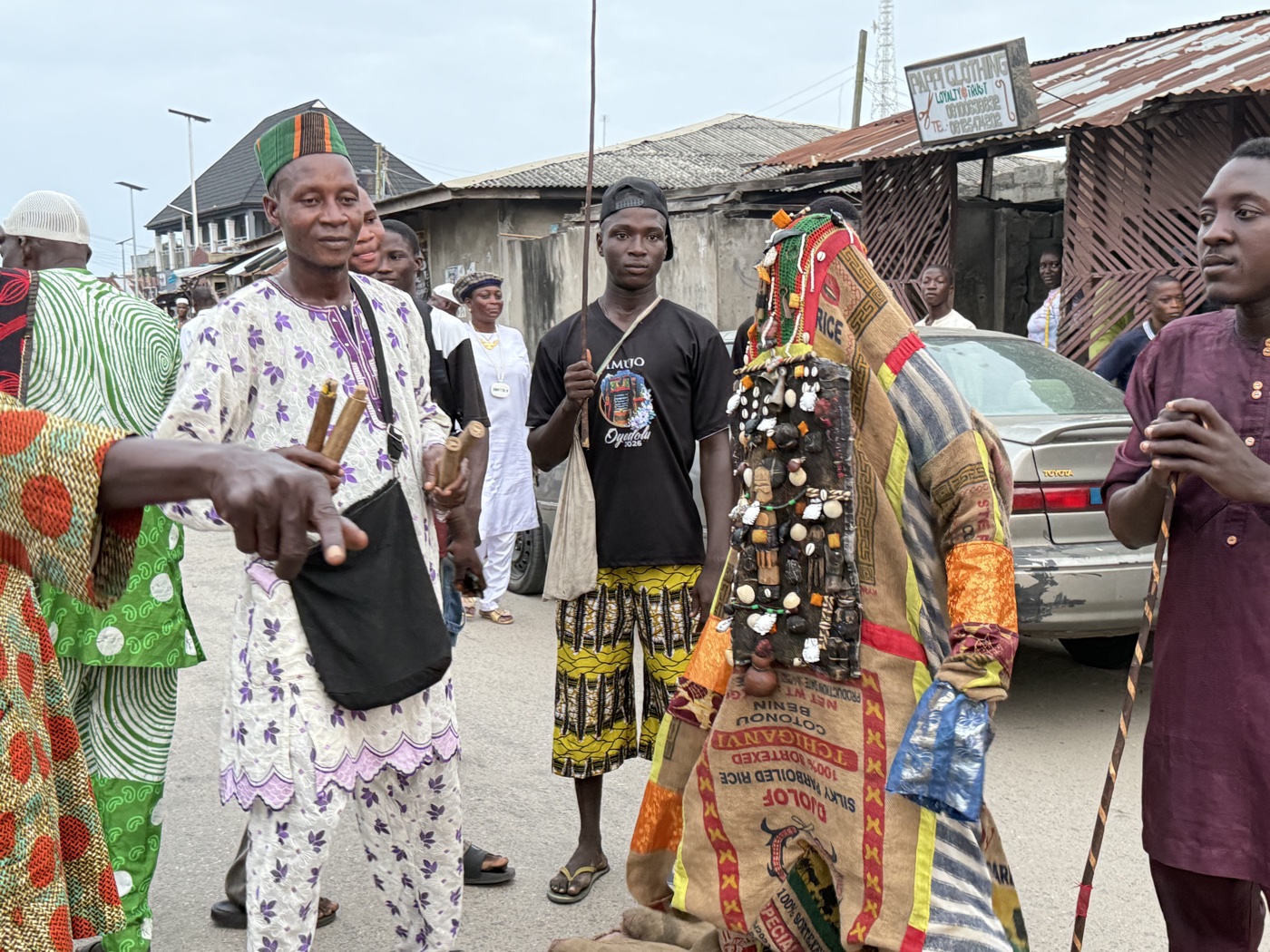
Music was the engine. West African songs worked by call and response, with a lead singer calling and the crowd answering. That is the chantwell and the calypsonian, and it is still the soca artist and the crowd on the road. Stick fighting came across from Central Africa and became kalinda in Trinidad.
Even the name John Canoe may come from the Gold Coast. Many historians link it to John Conny, an Ahanta leader who held a fort in what is now Ghana in the early 1700s.
The slave trade brought Yoruba, Igbo, Akan, Kongo and many other peoples to Jamaica, Trinidad and the rest of the Caribbean. They were forbidden their drums, their languages and their religions, so the traditions went underground and came back up through Christmas and pre-Lent celebrations: Jonkonnu in Jamaica, Canboulay and mas in Trinidad.
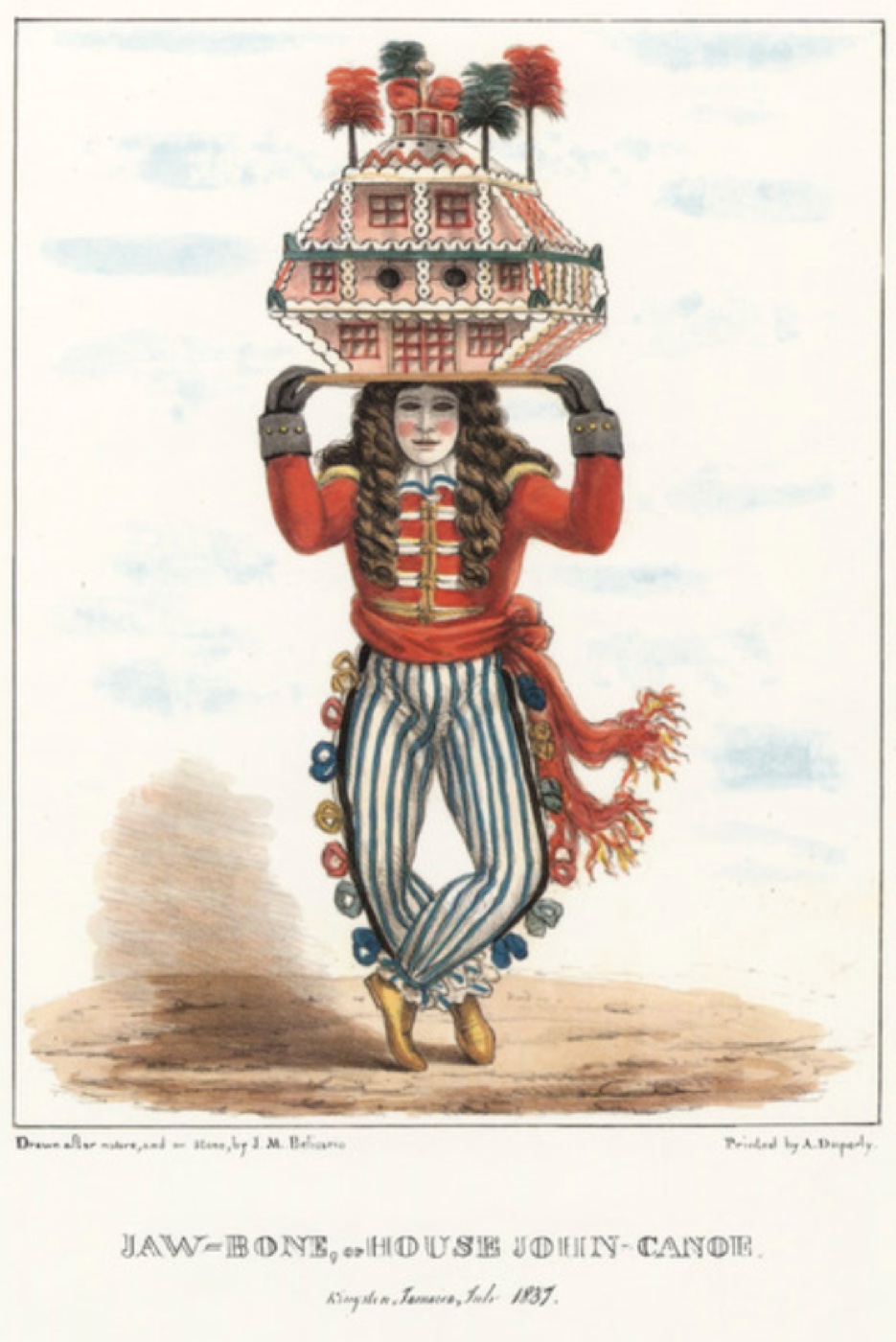
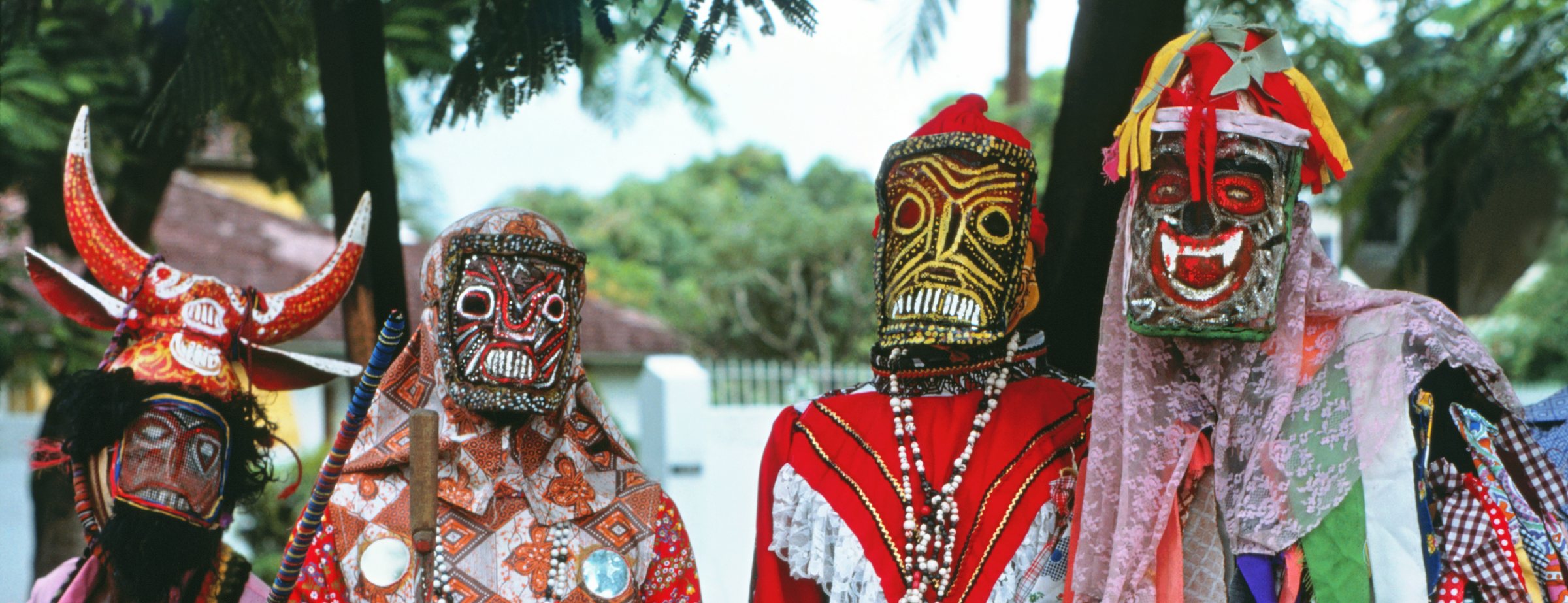
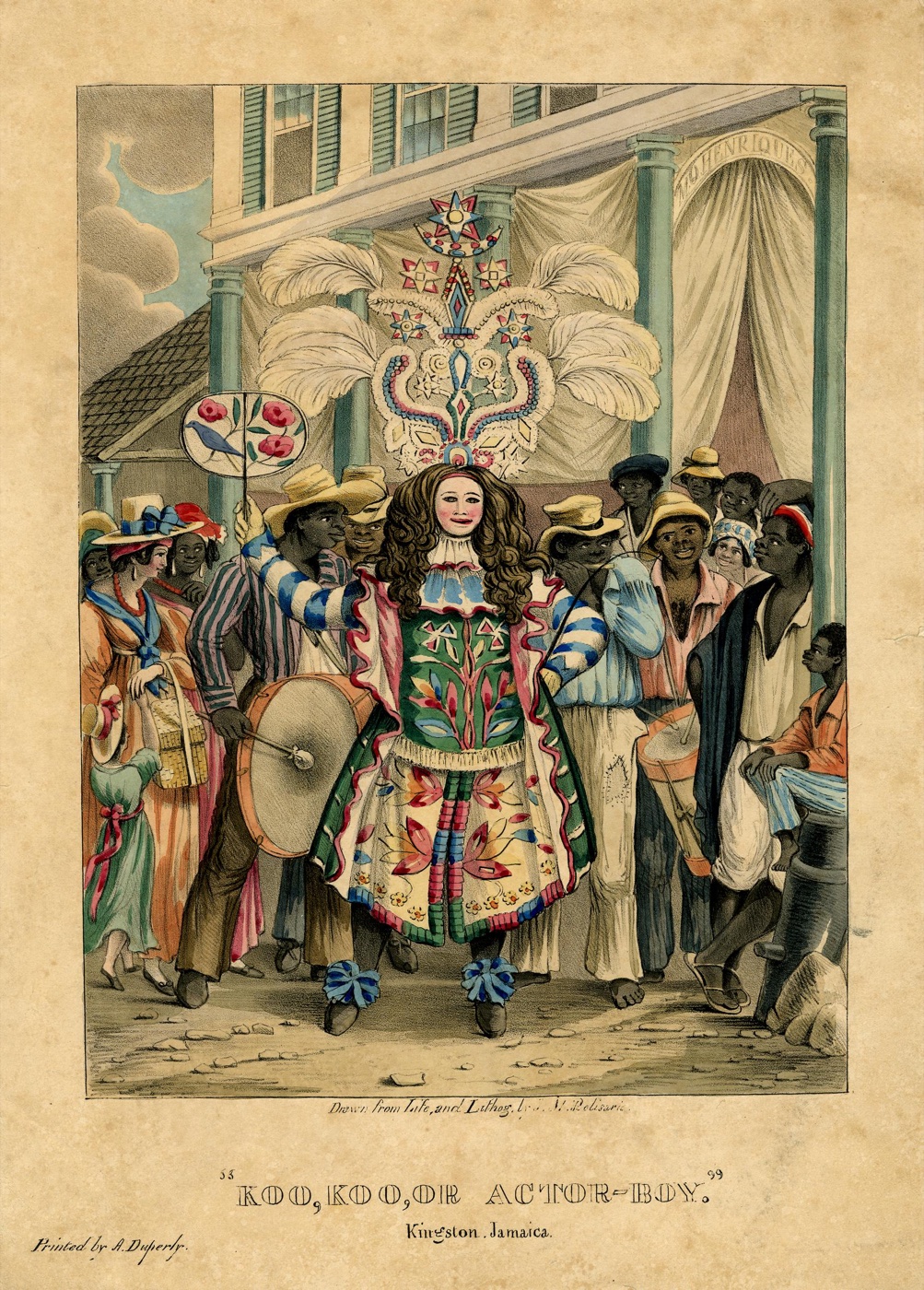
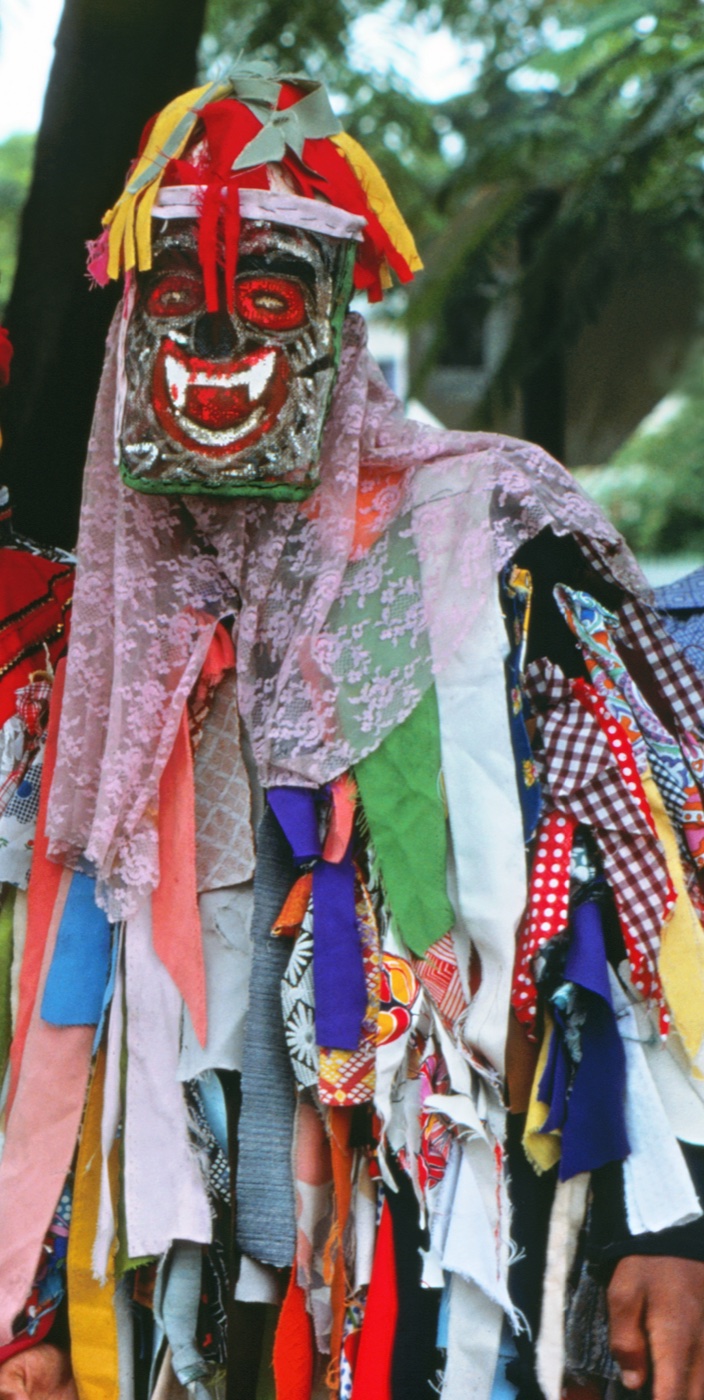
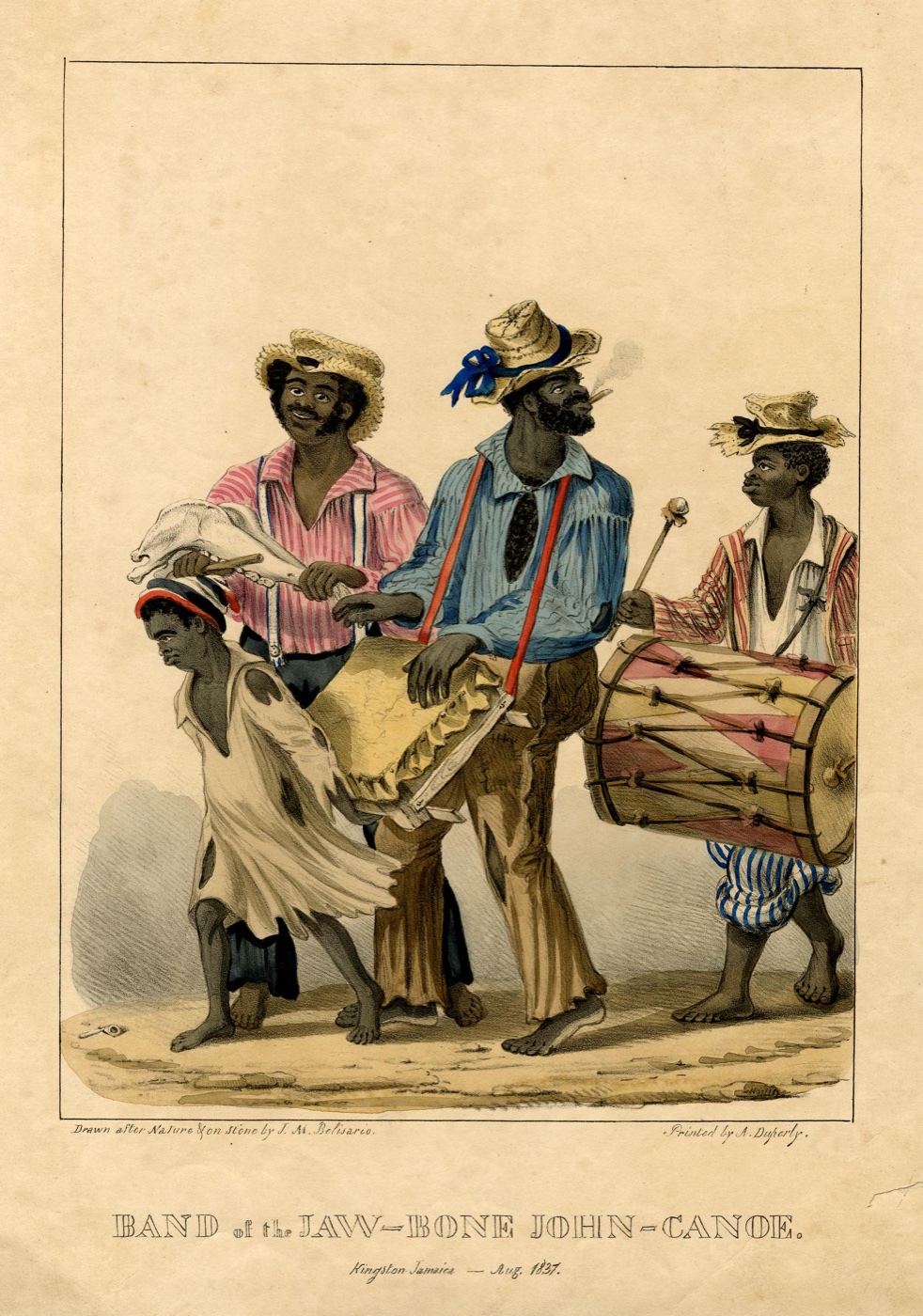
Jamaica, 1700s. Jamaica has its own African masquerade, Jonkonnu (John Canoe), a Christmas tradition of masked dancers and processions moving house to house. Edward Long described it in his History of Jamaica in 1774, and Isaac Mendes Belisario drew the bands in 1837. Historians trace its roots to West Africa. Jonkonnu spread to the Bahamas, where it became Junkanoo, and to Belize and North Carolina.
Trinidad, 1783. Trinidad was a Spanish colony with few settlers until Spain's 1783 Cedula of Population invited Catholic planters, many of them French, to settle with the Africans they enslaved. The planters held masked balls before Lent. The enslaved were shut out, so they held celebrations of their own. Britain took the island in 1797.
Emancipation, 1834 to 1838. Slavery ended in the British colonies in 1834, with full freedom in 1838. Freed Africans took Carnival into the streets with Canboulay, a night procession with torches and drums that remembered the burning of the cane fields. When police tried to shut it down in 1881, the people fought back in the Canboulay Riots.
The music. The British banned African drumming in Trinidad in the 1880s. Players switched to bamboo, then to biscuit tins and oil drums, and by the 1940s the steelpan was born. The chantwell singers who led the bands became calypsonians, and in the 1970s Lord Shorty mixed calypso with Indian rhythms to create soca.
Across the islands. Every island made it its own: Crop Over in Barbados, revived in 1974 from the old sugar harvest festival; Spicemas and Jab Jab in Grenada; Vincy Mas in St. Vincent; Kanaval in Haiti.
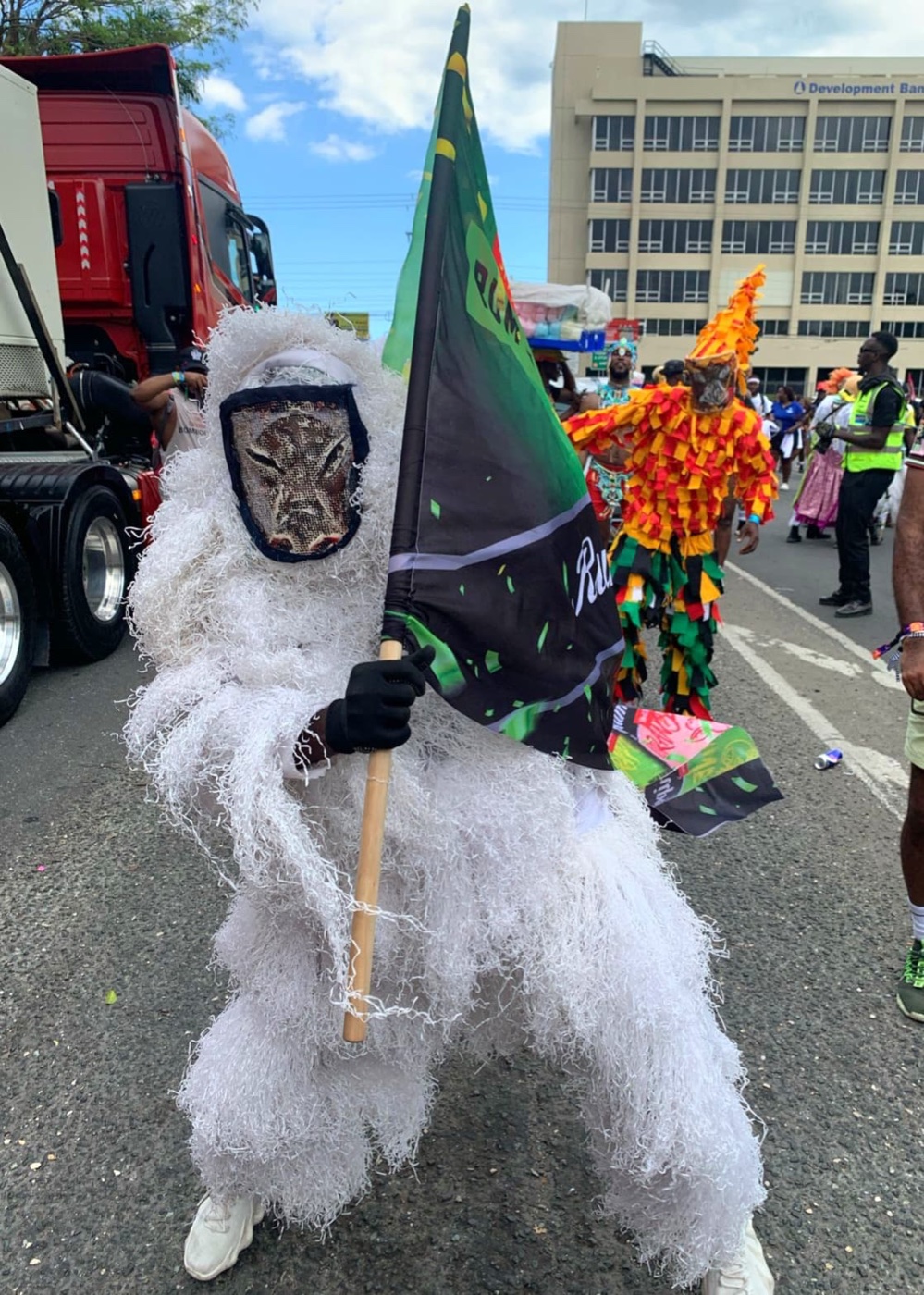
Jamaica Carnival. Students at the University of the West Indies, Mona, held carnival events from the 1950s. Byron Lee, whose band had played Trinidad Carnival for years, announced Jamaica Carnival in 1989, and the first road march ran through Kingston in April 1990.
The diaspora. West Indians carried Carnival with them: to Harlem and then Brooklyn's Eastern Parkway, to London's Notting Hill in 1966, to Toronto's Caribana in 1967, and to Boston's Blue Hill Avenue.