
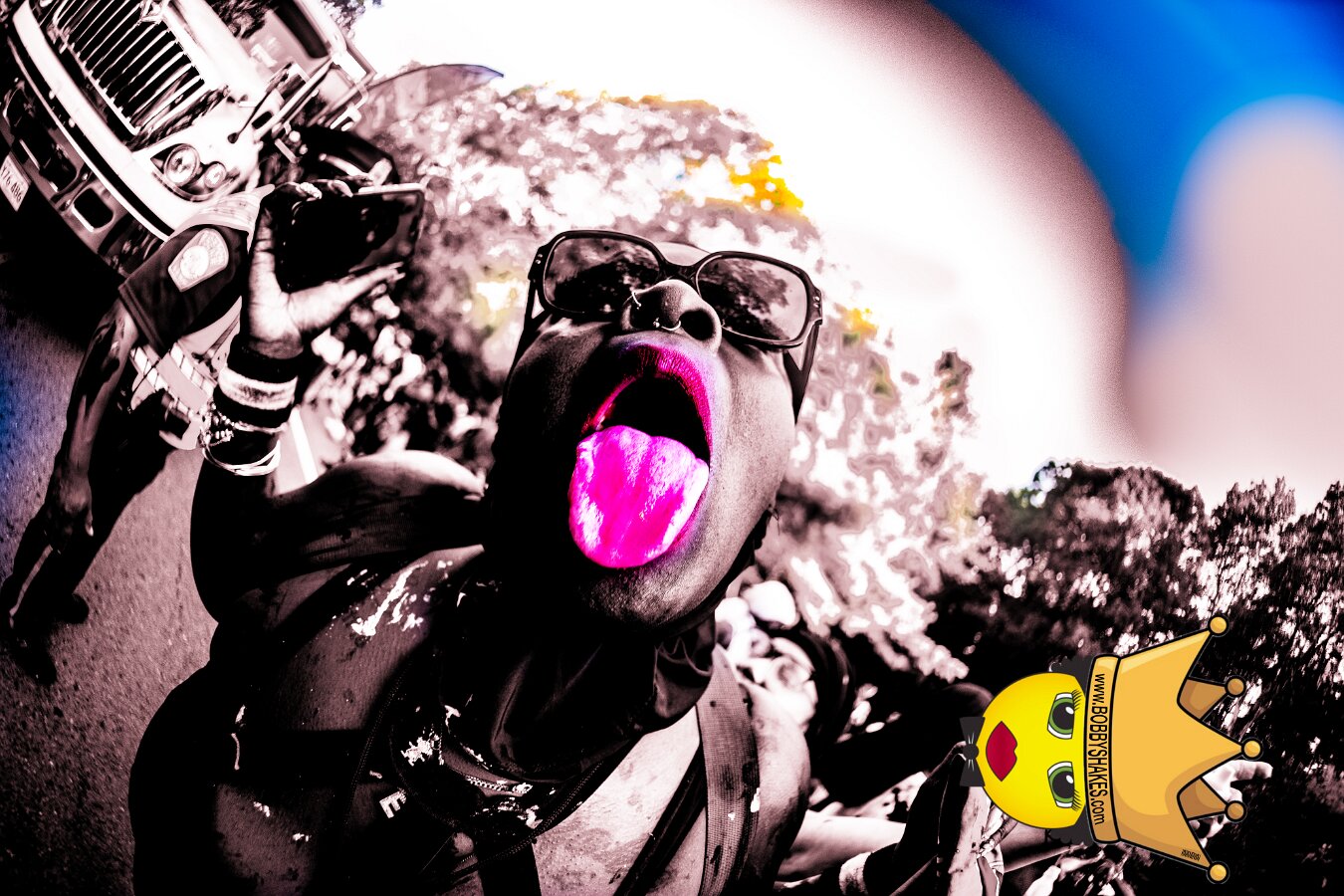
Every costume, every truck, every note of soca on the road traces back to a single idea: freedom performed in the face of the people who denied it.
Carnival came to the Caribbean with French settlers in the late 18th century, who brought the European tradition of masquerade balls and fetes in the days before Lent. In Trinidad — the island most consider the home of Caribbean Carnival — these celebrations belonged to the plantation class. Enslaved Africans were shut out of them entirely. So they built their own.
Carnival is a festival of freedom performed in the face of the people who denied it.
What they built was not an imitation. It was a parallel world, drawn from African drumming, dance, satire, and ritual, layered over what they could observe of their enslavers' revelry. At its center was Canboulay — from the French cannes brulees, "burnt cane" — rooted in the nighttime gathering of enslaved people to put out or manage cane fires on the plantations. Out of Canboulay came the drumming, the chantwell singers who would become calypsonians, the stickfighting (calinda), and the masking. It was celebration and coded resistance at the same time.
Emancipation changed everything. The Emancipation Act of 1833 took effect in 1834, and by 1838 the formerly enslaved were fully free — and they took Carnival into the open. Canboulay became a symbol of liberation and defiance, a public reenactment of a people who had survived. Freed Africans infused the season with their own culture, and the festival became what it remains: a celebration of freedom, staged by the descendants of the people it was once used to exclude.
The colonial authorities understood exactly what it meant, and they tried to kill it. The British banned drumming. They banned stickfighting. They outlawed African-derived religions like Orisha and the Spiritual Baptists. They even tried to suppress the steelpan. They failed at all of it. Carnival absorbed every ban and came back louder — the drum reborn in the pan, the resistance reborn in the calypso and later the soca, the defiance reborn every J'ouvert morning.
And it never stayed in one place. Each island took the tradition and made it its own. In Grenada it became Jab Jab, where players cover themselves in oil and molasses and play the very "devil" the colonizers called them. In the Bahamas it became Junkanoo. In Barbados, Crop Over, tied to the end of the sugarcane harvest. St. Vincent has Vincy Mas; other islands, their own names and rites. The through-line is the same everywhere: African memory, survived and celebrated in public.
Then the people carried it with them. When West Indians migrated to North America and Britain, Carnival came too — to Harlem and then Brooklyn, to Toronto's Caribana, to London's Notting Hill, and to Boston. In the diaspora it became something even larger than a festival: the principal way Caribbean people across generations, islands, classes, and backgrounds find one another and hold onto home in cities far from the sea they came from. A Boston Carnival weekend and a morning in Port of Spain are the same tradition, separated only by geography.
This is the history behind every frame in this archive — the J'ouvert oil, the mas on the road, the soca that fills a plaza, the fetes that run from the streets to the beaches to the boats. When you look at these photographs, you're not looking at a party. You're looking at the latest morning in a two-hundred-year tradition of a people celebrating a freedom they were never given, and took anyway. Photographs by Bobby Shakes and Anil Batra for bobbyshakes.com.