
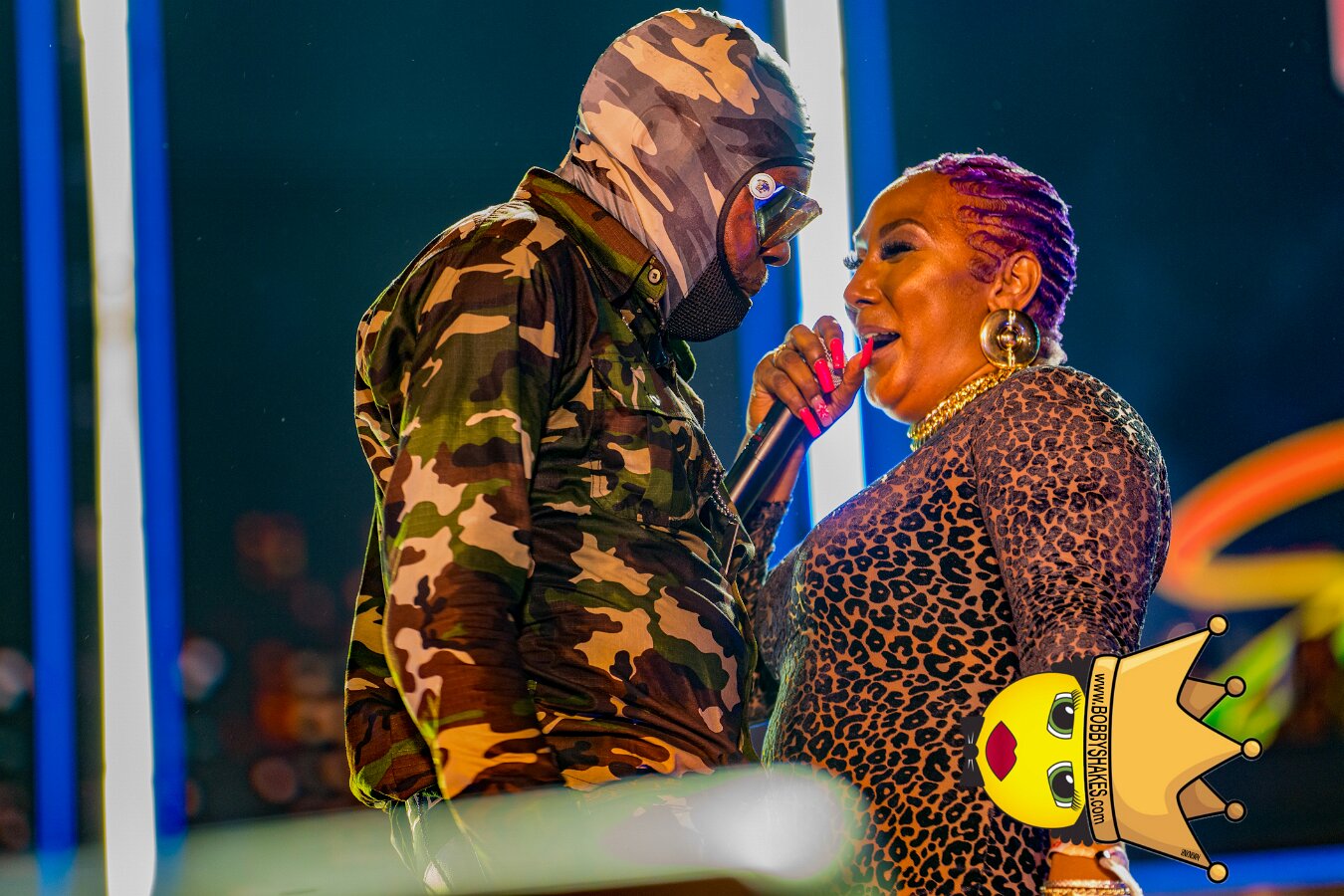
There are frames a photographer waits a whole career for. July 18, 2026, at Plantation Cove in St. Ann was one of them.
Sumfest didn't come the way it always has. Hurricane Melissa left Catherine Hall — the festival's Montego Bay home for more than three decades — unusable, and rather than fold, the organizers reimagined the whole thing: one night, one stage, billed "A Taste of Reggae Sumfest: Gaza vs Gully." Condensed. Intimate. Loaded. A single-year detour to the St. Ann coast while the west rebuilds.
It gave dancehall its picture of the year.
Because the shot everybody traveled for was two men who hadn't stood on the same stage in eighteen years.
Vybz Kartel and Mavado. Gaza and Gully. The last time they were in one frame together was the 2008 Sting clash — a rivalry that didn't just dominate dancehall, it split the island into two camps and pushed Jamaican music deeper into global pop culture than almost anything before it. For a whole generation, "which side yuh deh pan" wasn't a question about songs. It was identity.
And there they were. Same stage. Same light. Not as rivals — as legends.
From a shooter's seat, that's the entire story in one exposure: two catalogues, two decades, two men who once represented division, standing shoulder to shoulder while thousands sang every word back at them. You don't chase the pyro on a night like that. You wait for the gesture — Kartel's camo arm reaching across the space between them while Mavado works the mic, eighteen years of war folding into one shoulder-to-shoulder frame. That's the shot that runs on the wire the next morning. That's the shot that outlives the set.
The night carried more than nostalgia. A younger generation that grew up streaming Kartel and Mavado stood next to the ones who lived the original era, and the room bridged both. The card kept the culture honest from early: Dancing Dynamites opened the performance slots, and the live run built through Shauna Controlla, Shawn Storm, Yung Wild Apache, Marcy Chin, and Harry Toddla. Ayetian — one of the fastest-rising names in the genre — turned last year's Sumfest debut into a real spotlight moment, and Queen Ifrica held the conscious lane with the best light discipline of the night before Jamal carried it toward midnight. Sound-system royalty ran the juggling all evening, presented under the Magnum banner with the Boom Boom Award activation setting the stage for the headliners.
Just past midnight, the night paused to remember one of its own. The programme made room for a tribute to Fantan Mojah, the conscious-reggae stalwart born Owen Moncrieffe, who passed away on July 14, days before the festival, at 49. Sumfest called him a true soldier for reggae music — a voice whose lyrics carried purpose and whose message never wavered — and for a few minutes at Plantation Cove the crowd held space for a man the reggae world had just lost. Rest in power.
Then the closer everyone had waited for. Mavado and Vybz Kartel didn't take the stage until 12:30 AM — and didn't leave until 3. Two and a half hours. Two catalogues, two decades, one stage, straight through the small hours. From a shooter's standpoint you pace the whole night around that window; everything before it is warm-up, and that marathon is where the picture of the year lives.
But make no mistake about what this edition was. In a year defined by a storm, Sumfest refused to stand still. The scaled-down format didn't shrink the moment — it sharpened it. One stage instead of a week-long sprawl meant every eye and every lens pointed at the same thing at the same time, and the thing they pointed at was the rivalry that once divided dancehall becoming a symbol of how the culture heals without losing its competitive fire.
The story isn't over. Gaza and Gully take the reunion to The O2 Arena in London on September 9, 2026 — their first UK stage together. The image that started at Plantation Cove is about to go global.
For a festival that had every reason to cancel, Sumfest 2026 did the opposite. It gave dancehall its picture of the year.